
The Maldives is celebrated for its vibrant coral reefs, turquoise lagoons and extraordinary marine biodiversity. Yet beyond its famous underwater landscapes lies another fascinating world — one inhabited by dolphins that travel between sheltered atolls and the vast Indian Ocean.
Watching a pod of dolphins glide alongside a boat or leap above the waves is among the most memorable experiences the Maldives has to offer. But these encounters reveal much more than the beauty of marine life. They also offer an opportunity to understand dolphin behaviour, support conservation and appreciate the delicate balance of the ocean ecosystem.
From the playful spinner dolphins frequently seen in Maldivian waters to the marine research programmes supported by luxury resorts, we explore where to encounter these remarkable animals and how to do so responsibly.
Meet the Dolphins of the Maldives
The Maldives is home to an impressive diversity of marine mammals, with 23 species of cetaceans — dolphins and whales — recorded in its waters.
Its geography plays an important role in this biodiversity. Shallow coral atolls meet deep ocean channels, creating habitats that support different species throughout the archipelago.
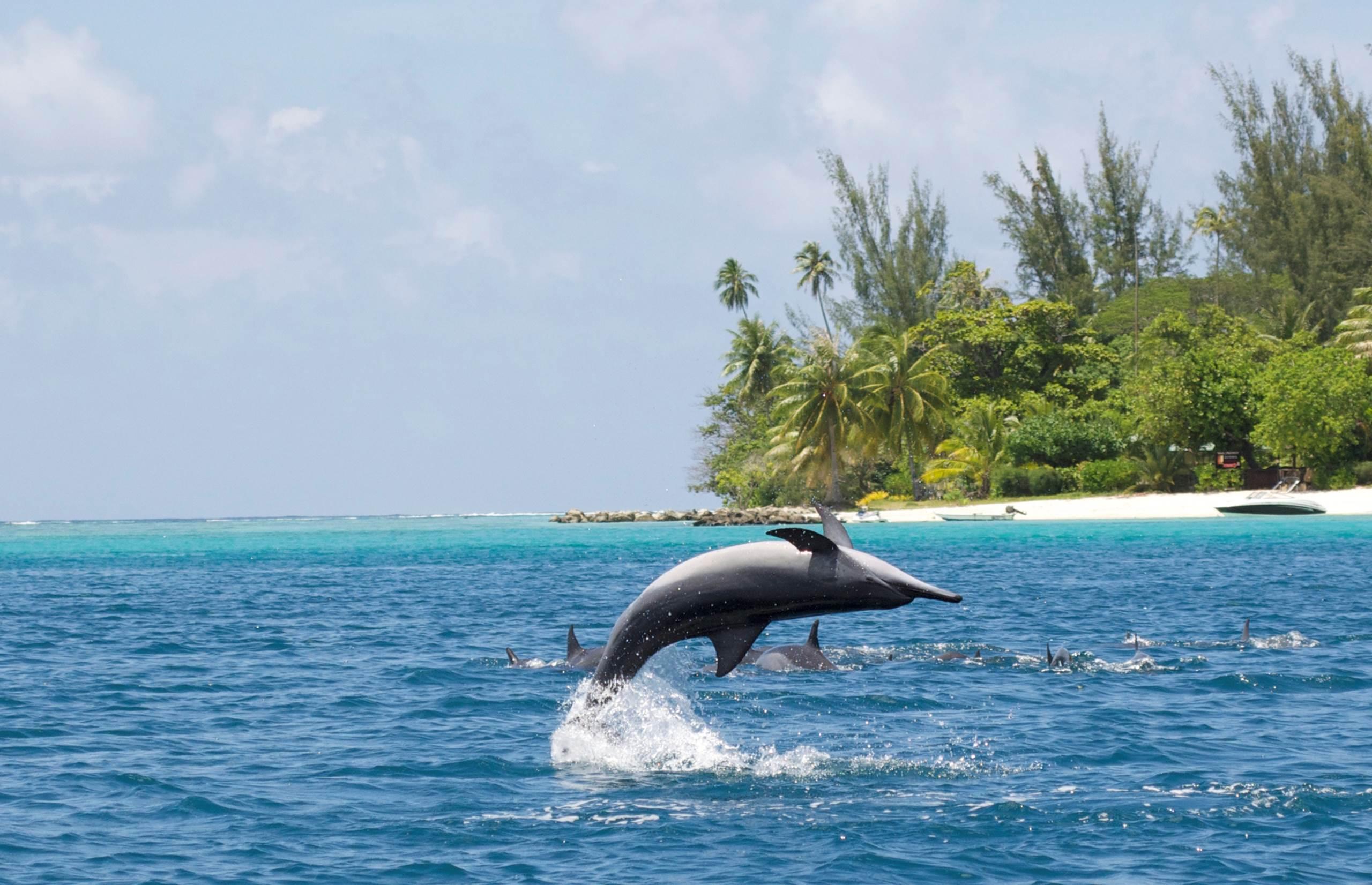
Spinner Dolphin
Stenella longirostris
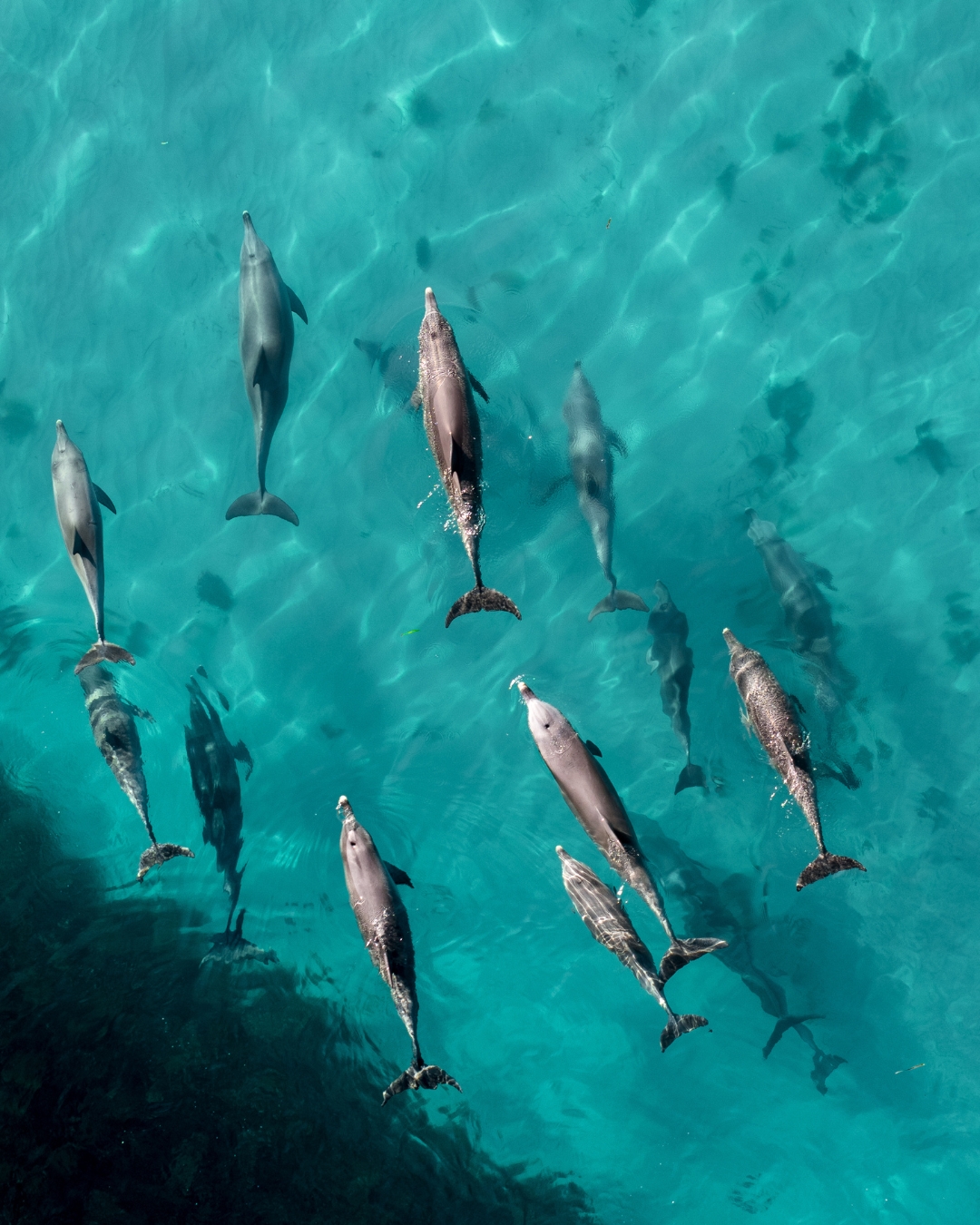
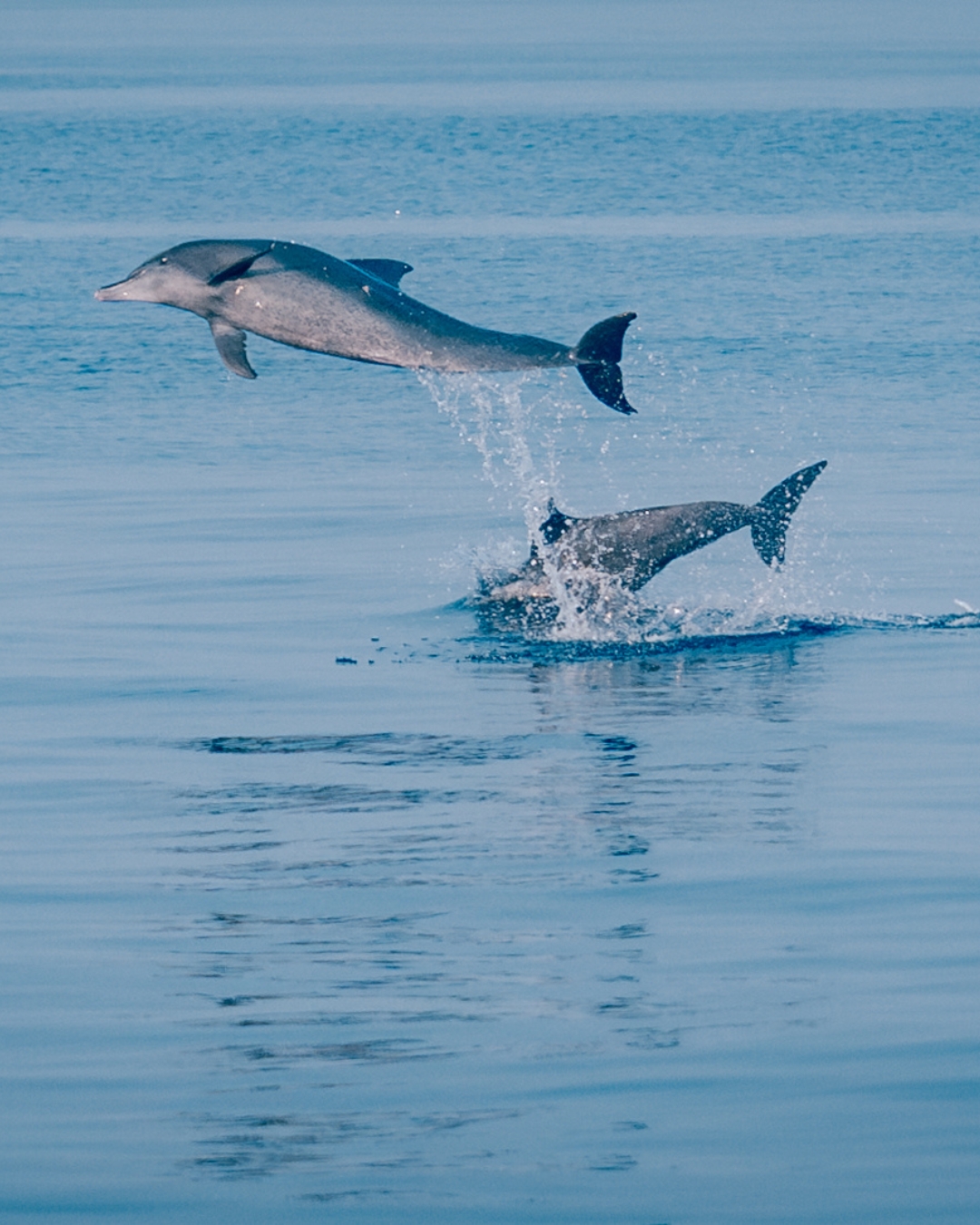
The most frequently observed dolphin in the Maldives, spinner dolphins are famous for their spectacular acrobatic leaps, sometimes rotating several times before returning to the water. Highly social, they travel in pods ranging from small groups to gatherings of hundreds. They often rest and socialise in sheltered atoll waters before heading into deeper areas to feed.
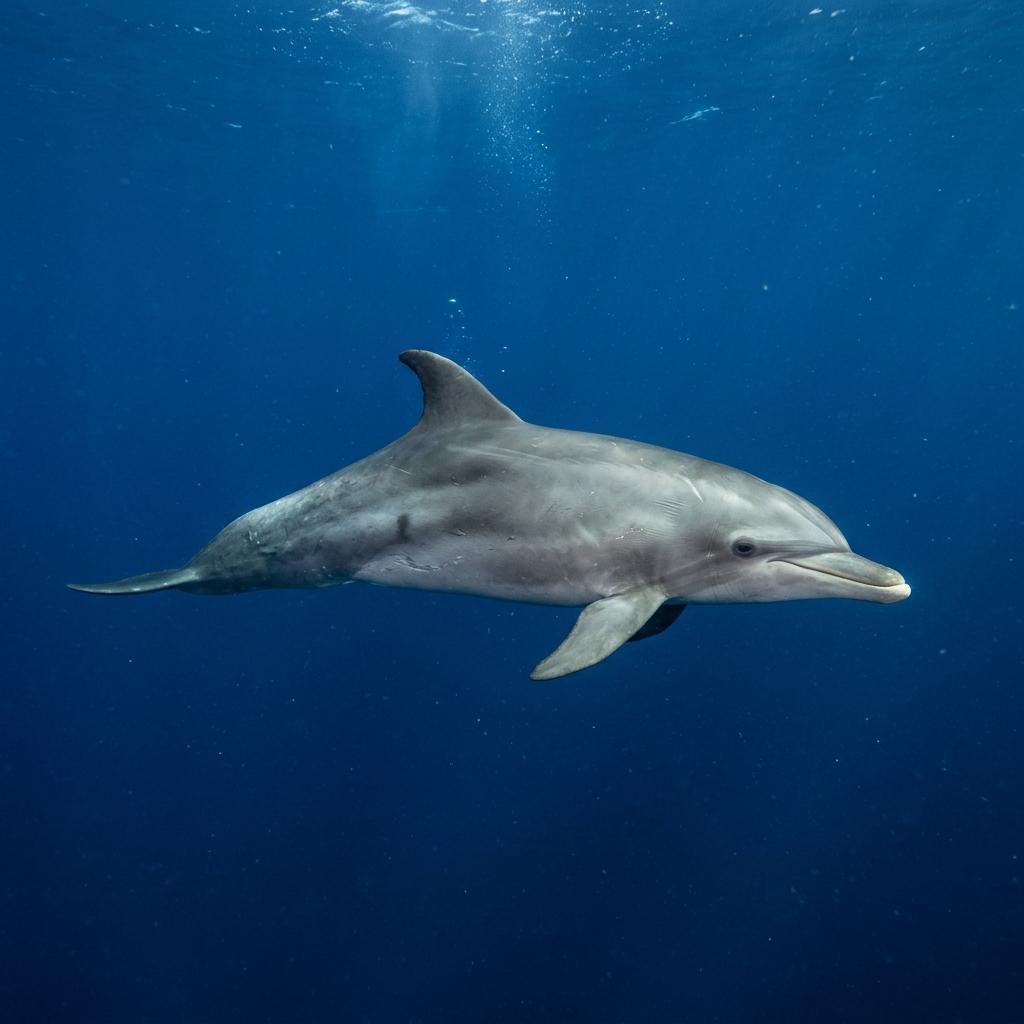
Indo-Pacific Bottlenose Dolphin
Tursiops aduncus
Often associated with coastal waters and reef environments, this species is recognised for its streamlined body and distinctive curved dorsal fin.
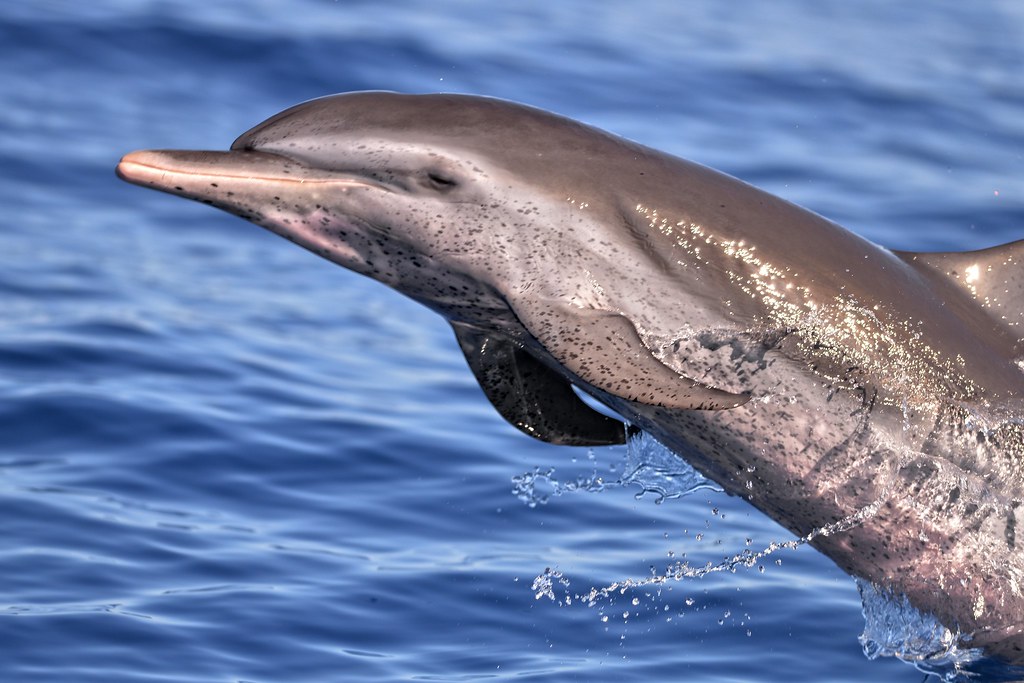
Pantropical Spotted Dolphin
Stenella attenuata
An energetic oceanic species distinguished by the spots that develop across its body as it matures. These dolphins are well adapted to life in deeper offshore waters.
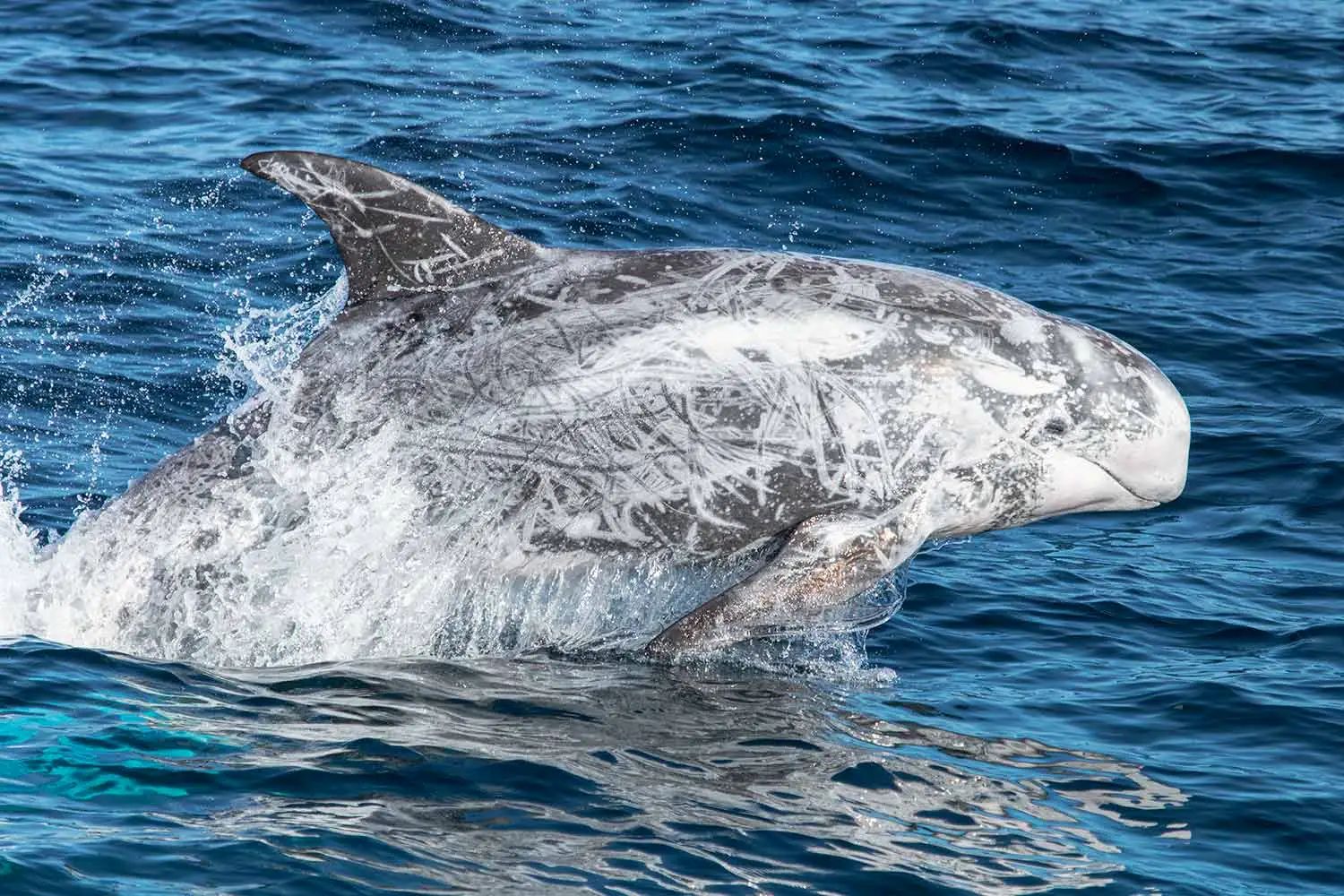
Risso’s Dolphin
Grampus griseus
More commonly associated with deeper waters, Risso’s dolphins are recognised by their rounded heads and the pale scars that accumulate across their bodies over time. Sightings are generally less frequent than those of spinner dolphins.
Other species recorded in Maldivian waters include the common bottlenose dolphin and striped dolphin, alongside larger marine mammals such as sperm whales and short-finned pilot whales.
Where Can You See Dolphins in the Maldives?
Unlike some marine destinations, the Maldives does not have one particular location that can be considered its dolphin capital. These animals move naturally between atolls, reef systems and deeper ocean waters, following food sources, currents and established travel routes.
The channels between reefs, locally known as kandu, are particularly important. Connecting sheltered lagoons with the open ocean, they provide natural corridors for marine life.
Several areas are especially relevant for dolphin sightings and research:
- North Malé Atoll: The waters surrounding Kuda Huraa are associated with dolphin observation and marine research.
- Baa Atoll: Known for its rich marine biodiversity, the atoll is also an important area for long-term dolphin identification and monitoring.
- Ari Atoll: Its extensive reef systems and surrounding ocean waters provide opportunities for dolphin encounters.
- Vaavu Atoll: Deep channels and connections to the open ocean create suitable conditions for several marine species.
Although dolphins can be encountered throughout the year, sightings are never guaranteed. Their movements are influenced by natural conditions, and the best excursions allow these animals to be observed without disrupting their behaviour.
Dolphin Watching Experiences at Luxury Maldives Resorts
For travellers wishing to encounter dolphins in their natural habitat, several luxury resorts offer dedicated excursions. These experiences typically take guests beyond the island’s immediate lagoon, where knowledgeable crews look for dolphins along their natural routes.

JOALI Maldives
Located in Raa Atoll, JOALI Maldives offers a two-hour Dolphin Quest, inviting guests to discover the surrounding marine environment while searching for wild dolphins. The excursion can be enjoyed as a shared experience or arranged privately for a more personalised journey.
Dolphin Quest
Group excursion: $95 per person | 2 hours
Private Dolphin Quest: $1,700 | 2 hours | Up to 4 guests

InterContinental Maldives Maamunagau Resort
Surrounded by the waters of Raa Atoll, InterContinental Maldives Maamunagau Resort offers a two-hour Dolphin Cruise, combining the excitement of marine wildlife observation with the beauty of the Indian Ocean. Private boat arrangements are also available for guests who prefer an exclusive experience.
Dolphin Cruise
Group excursion: $110 per person | 2 hours
Minimum participation: 6 guests
Private boat rental: From $450 | Price depends on the boat selected
The St. Regis Maldives Vommuli Resort
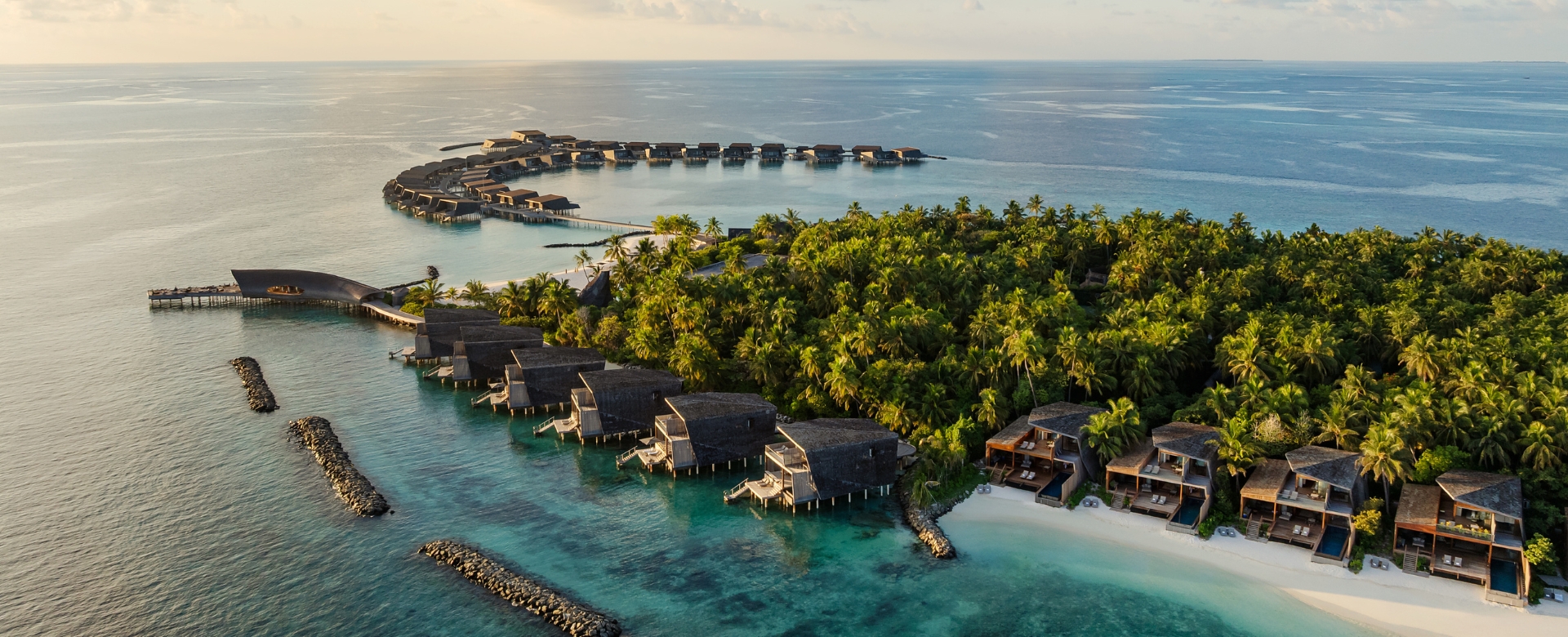
At The St. Regis Maldives Vommuli Resort, guests can embark on a Dolphin Exploration excursion through the surrounding waters of Dhaalu Atoll. The resort offers both group outings and private experiences aboard a traditional dhoni or speedboat, allowing guests to choose their preferred way to explore.
Dolphin Exploration
Group excursion: $90 per person | 1.5 hours
Private dhoni: $600 | Up to 6 guests
Private speedboat: $400 | Up to 4 guests
Prices are indicative and based on the supplied resort information. All rates are quoted in USD and are subject to change. Taxes and service charges may apply; their inclusion has not been confirmed. Excursions are subject to availability, weather and sea conditions. Dolphin sightings cannot be guaranteed. Please confirm current rates, applicable charges and arrangements with the resort before booking.
Beyond the Encounter: Four Seasons and Dolphin Conservation
At Four Seasons Resort Maldives at Landaa Giraavaru and Four Seasons Resort Maldives at Kuda Huraa, dolphin encounters extend beyond traditional wildlife watching.
Through Marine Savers, the resorts support long-term marine research, including dolphin identification and behavioural monitoring. One of the techniques used is photo-identification, where researchers photograph dolphins’ dorsal fins to recognise individual animals through their unique notches, scars and markings.
By comparing photographs collected during different encounters, researchers can identify returning dolphins, follow their movements and better understand how groups interact and change over time.
The programme also examines how dolphins respond to boat activity, helping develop a deeper understanding of the relationship between marine wildlife and tourism. It is an example of how carefully managed resort experiences can contribute valuable observations to scientific research.
Why Responsible Dolphin Watching Matters
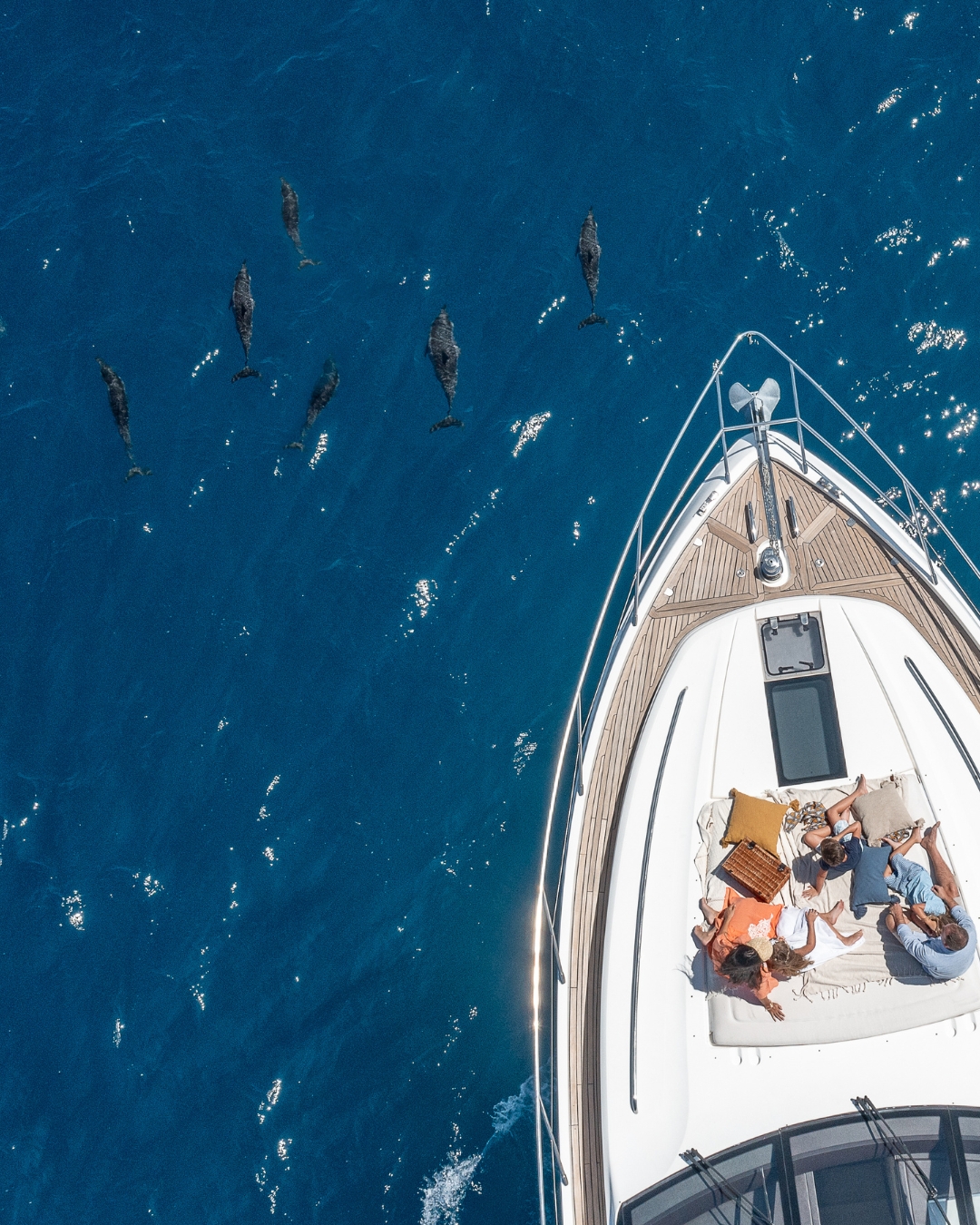
Despite their remarkable adaptability, dolphins face growing pressures from human activity and environmental change.
Increasing boat traffic can disturb their natural movements, while underwater noise may interfere with communication and echolocation. Fishing activities, accidental entanglement, marine pollution and changes in ocean ecosystems also affect the habitats and food sources on which these animals depend.
For travellers, responsible dolphin watching begins with a few simple principles: maintaining a respectful distance, avoiding sudden boat movements, never chasing or surrounding a pod, and allowing dolphins to decide whether to approach.
Feeding, touching or attempting to attract dolphins should always be avoided. Choosing resorts and operators that prioritise responsible wildlife observation and support marine research can also make a meaningful difference.
The most rewarding encounter is not necessarily the closest one, but one in which dolphins remain free to behave naturally.
Discover the Marine Wonders of the Maldives with SEANSES
At SEANSES, we curate exceptional island escapes that bring together refined hospitality and meaningful experiences, helping travellers discover the natural beauty of the Maldives while appreciating the importance of preserving it for generations to come.


